Transaction Data and Deal Comparables
The problem
Pricing a deal means assembling comparable evidence by hand. Closed institutional transactions sit scattered across inconsistent records, thin on the detail that makes a deal comparable, and only reach the public register once the pricing signal they carried has already moved the market.
What Quanthome does
Screen the institutional Swiss transactions Quanthome tracks as they close, map them across the country by market value and carbon intensity, and read how prices have moved over time, each deal carrying buyer, seller, price and return on assets, on the same maintained base as the indexed market.
Price the deal on what the market just paid.
See the deal, not the count
Read institutional Swiss deals as they close (buyer, seller, price, return on assets and the building behind each one) on the same maintained base as the indexed market, not as a line in a market tally.
Stop hand-building the comp set
Match the asset on type, location and size and screen the tracked transactions against it, so no one re-collects deals or reconciles inconsistent records before the pricing can begin.
Refresh, never rebuild
Read the pricing signal while it is still current, ahead of the public record, and a saved screen reopens on the deals closed since, moving the time from assembling evidence to pricing the bid.
How transaction managers find new opportunities
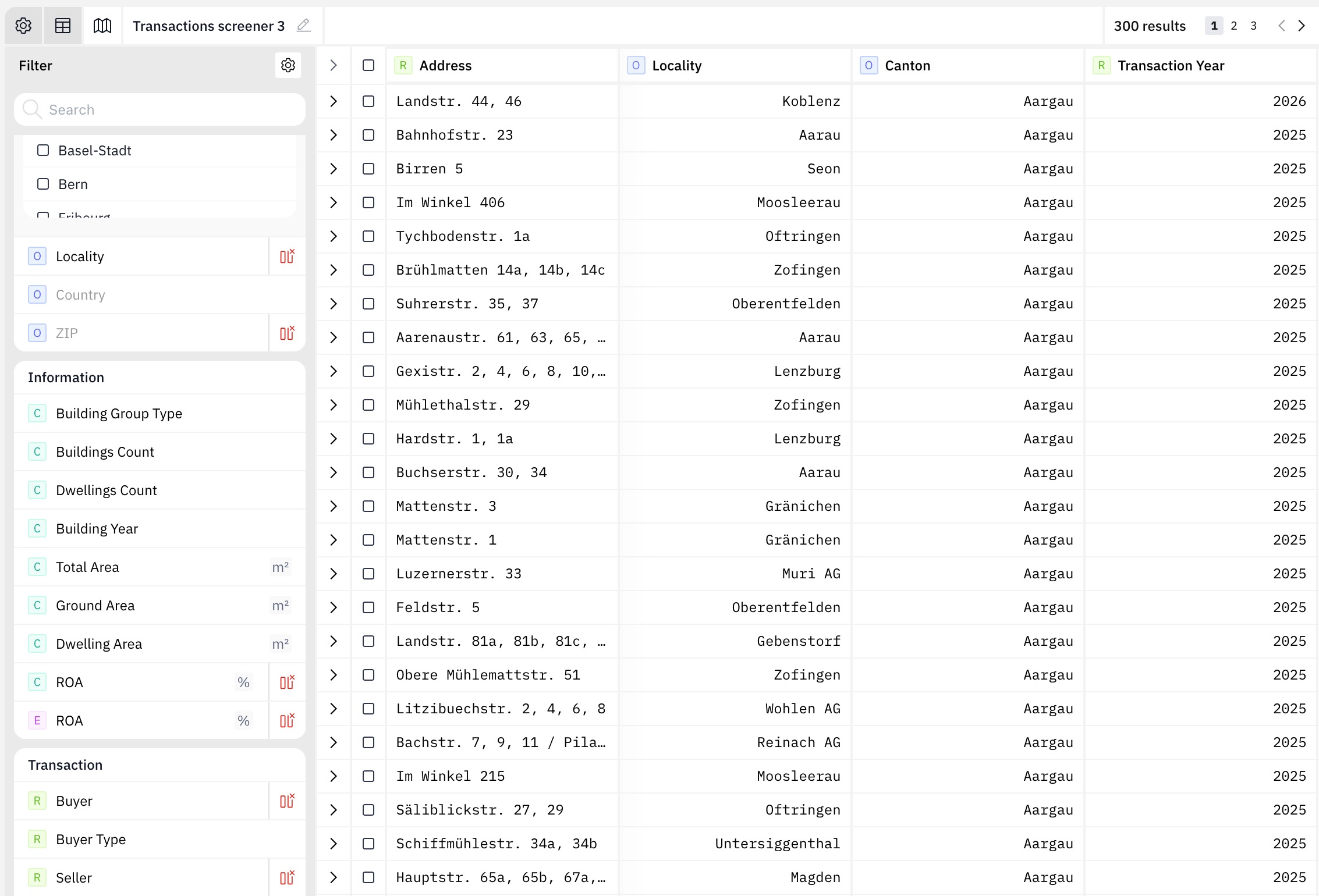
Filter the tracked institutional transactions by canton, locality, building characteristics and return on assets, down to the parties on the deal: buyer, buyer type and seller. Every match is a real closed deal on the same maintained base as the indexed market, addressable down to the building, not a line in a market count. Save the screen and the next deal reopens it on current transactions, the same criteria on the deals closed since.
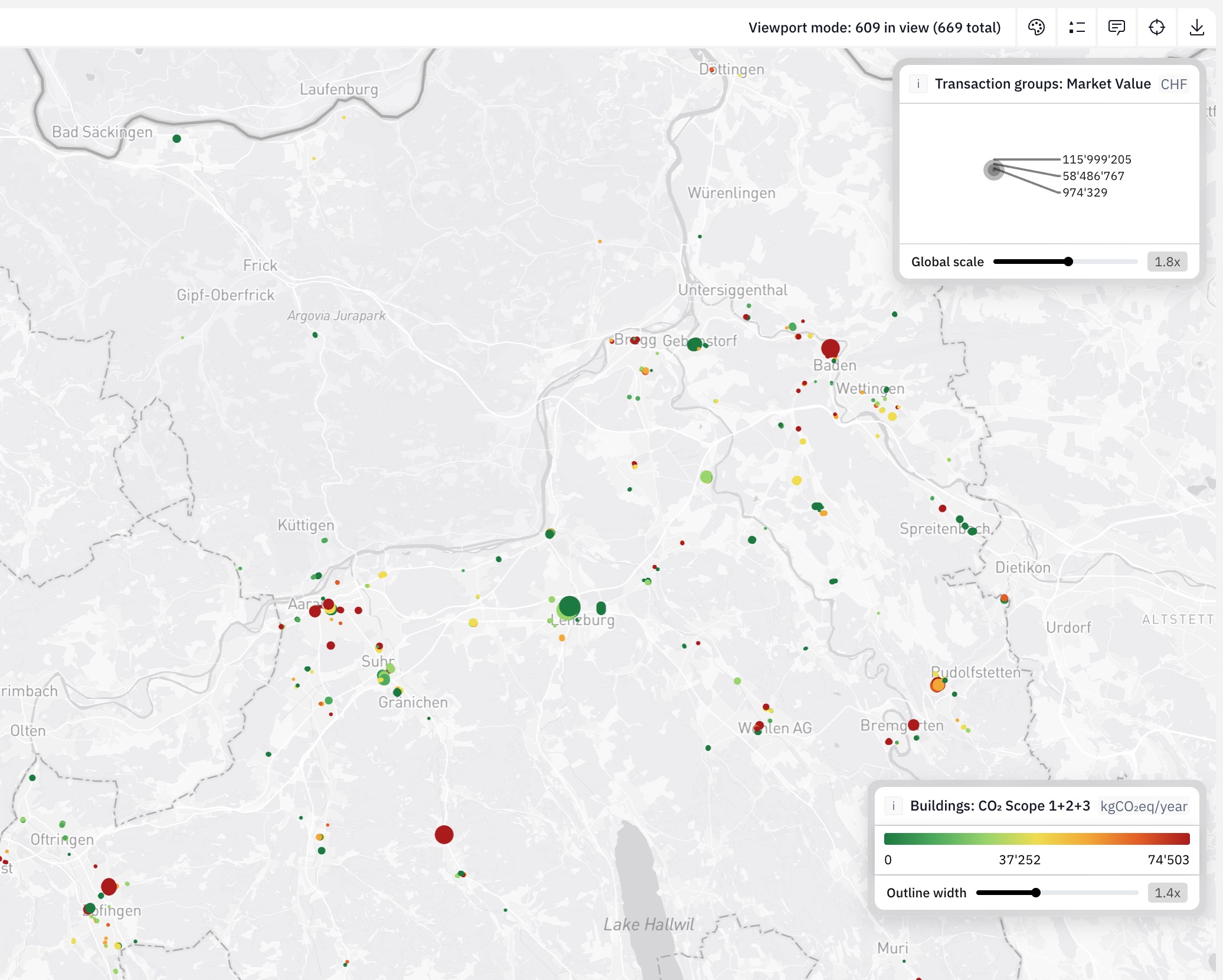
Plot the screened transactions across Switzerland, each dot sized by deal market value and shaded by the building's carbon intensity, so price and quality read together. Pan and zoom to a market and the view counts what is in front of you, turning a result set into the geography of where capital is actually trading.
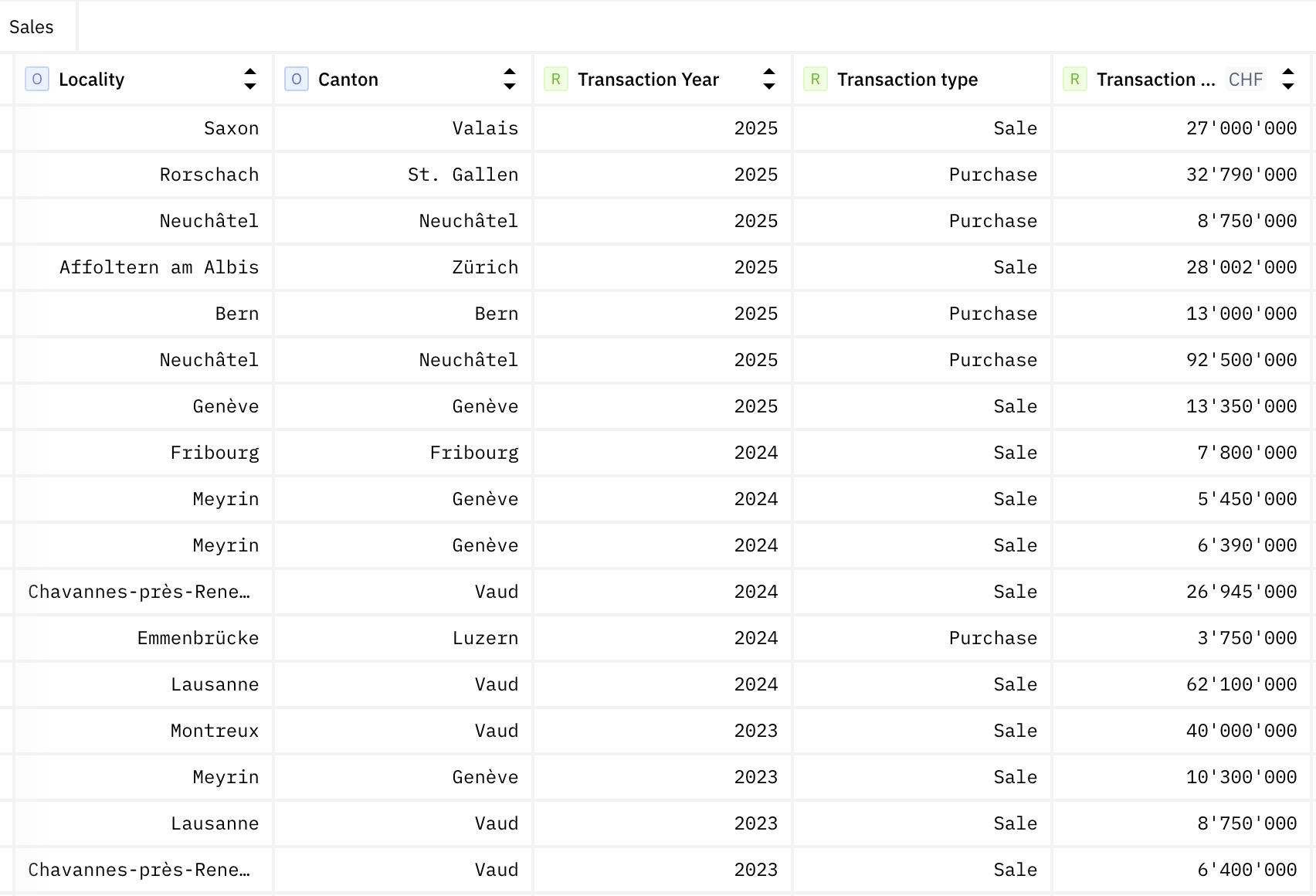
Read closed sales and purchases by locality, canton, year and price to see how a segment has moved, from single-digit-million deals to blocks above CHF 90 million. Sort and group the transactions over time to read the direction of pricing across a market, not a single comparable in isolation.
Built for
The investment, transaction and valuation teams that price real estate against what the market is actually paying.
Owners & operators
Quanthome gives direct asset owners and the property managers who run their buildings one consistent, building-level view, performance, tenancy, capex and risk, from the same data.
Asset allocators & indirect real estate investors
One view across your direct buildings and your indirect holdings, down to the building, for the reports and decisions your team owns.
Advisors, consultants & brokers
Advise clients on current transaction and market data, not a deck rebuilt by hand. Spend less time producing decks and more on the analysis the client pays for.
Service providers & valuers
Run the same repeatable process every cycle, on the regulator's timetable, from one structured Swiss dataset rather than a fresh round of data collection each time.
Researchers
The full real estate dataset, covering buildings, transactions and vehicles, ready for research and market analysis.
See How Quanthome Supports Transaction Analysis
Seasonality in Swiss REIV Prices
The Building Stock of Swiss Real Estate Investment Vehicles
Transaction comparables in Swiss real estate: reading the pricing signal before the record catches up
What People Ask Before the First Comparable Set
What is a transaction comparable in real estate?
A transaction comparable is a closed deal used as pricing evidence for an asset under negotiation, matched on criteria such as type, location and size. Its value depends on detail and timeliness. Quanthome tracks institutional transactions as they close, each carrying buyer, seller, price, return on assets and building characteristics, so a deal can be understood and compared rather than just counted.
What detail does each transaction carry?
Every tracked transaction carries buyer, seller, price, return on assets and the characteristics of the building behind the deal. That detail is what turns a transaction record into usable pricing evidence: the deal can be weighted for how closely it matches the asset you are pricing, rather than entering the analysis as a line in a market count.
How quickly do deals appear after they close?
Institutional Swiss transactions are tracked as they close, ahead of the public record. By the time a deal reaches the public register, the pricing signal it carried has usually already moved the market. Reading the signal while it is still current means the comparable set reflects what the market is paying now rather than what it paid last quarter.
Can comparables be pulled for a specific asset?
Yes. Define the asset by type, location and size, the criteria a comparable set has to match, then screen the tracked institutional transactions against them. The result is a set of deals matched to the asset, each with buyer, seller, price and yield, so the bid is priced against what the market actually paid for comparable buildings.
How does a saved screen help on the next deal?
A saved screen carries its asset criteria and its comparable set forward. The next pricing exercise reopens it on current transactions, including the deals that have closed since it was last used, rather than starting from a blank sheet. The evidence stays consistent from one deal to the next, and time moves from assembling comparables to pricing the bid.
Comparables carry forward deal after deal
Tell us the asset and the criteria. We will pull the comparable set with you in a working session.
Book a working session