Due Diligence and Valuation
The problem
A valuation or a transaction is mostly evidence-gathering before any judgment begins. Valuers and transaction managers spend their hours pulling building records, hunting comparables and assembling context one source at a time: fastidious work that caps how many deals they can take on and leaves room for something to be missed.
What Quanthome does
Quanthome assembles the due diligence for any building from one structured base (every field gathered, benchmarked against local comparables, and read in its micro and macro context), so the fastidious work no longer falls on valuers and transaction managers, who analyze more deals, miss less, and spend their time on the judgment that adds value.
Clear the fastidious work, keep the judgment.
See the whole building
Every field, benchmark and the building's micro and macro situation land in one view, each figure traceable to its source, so nothing in the file is overlooked.
Stop gathering by hand
The fastidious collection across registers, comparables and context is automated end to end, so the slow half of every valuation is done before judgment begins.
More deals, more judgment
With the evidence assembled from one base, valuers and transaction managers take on more deals and spend their hours on the opinion of value, not the data behind it.
How valuers assemble due diligence from one base
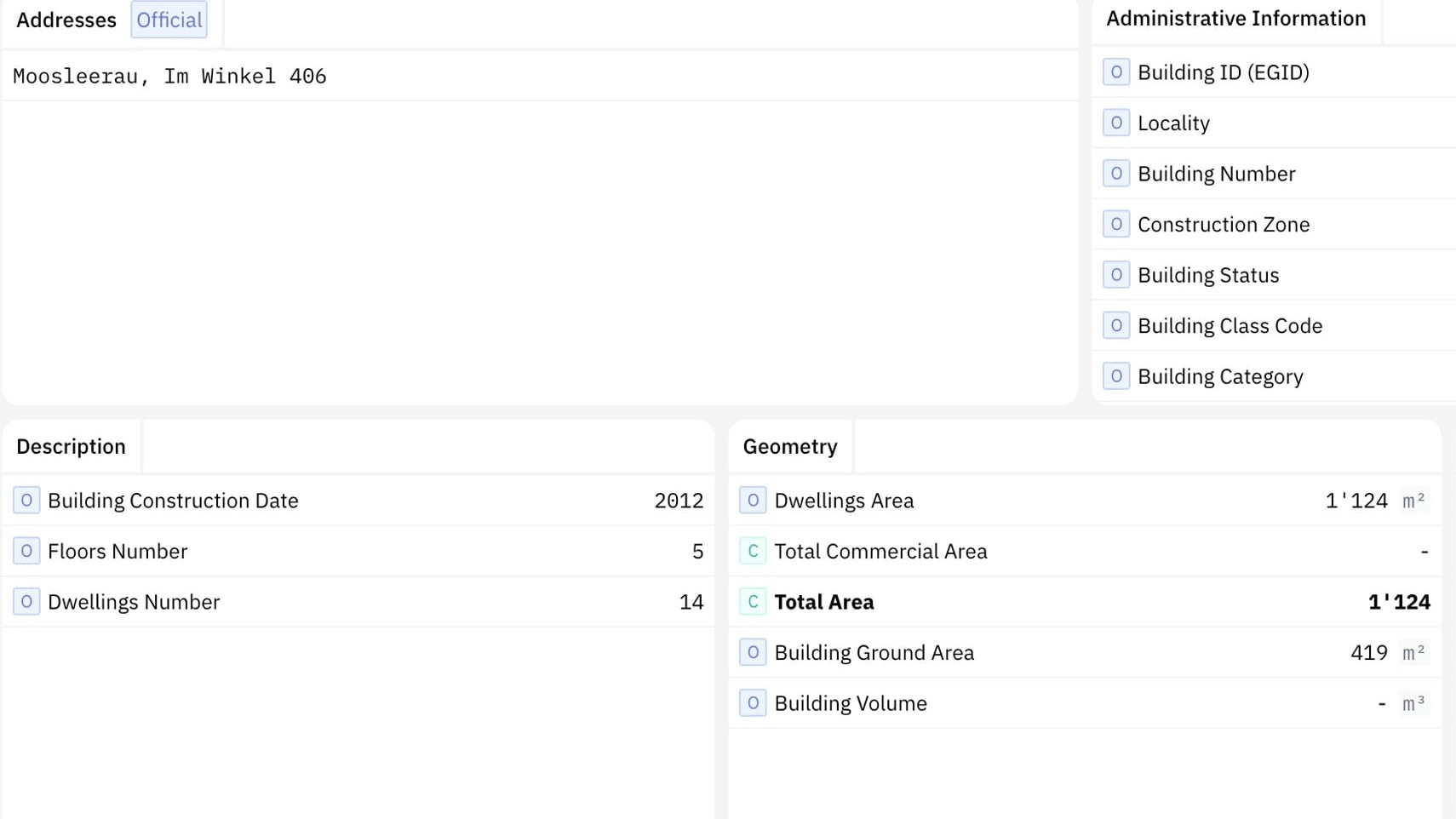
Name a building and Quanthome assembles its full structured record (addresses, administrative status, construction, geometry and lot), each field traceable to its source, with no manual collection. The fastidious half of due diligence is done before the valuation begins, so nothing is missed and the file already stands up to review. The same structured record feeds the next deal, so each new building starts from a query on current data rather than a fresh collection effort.
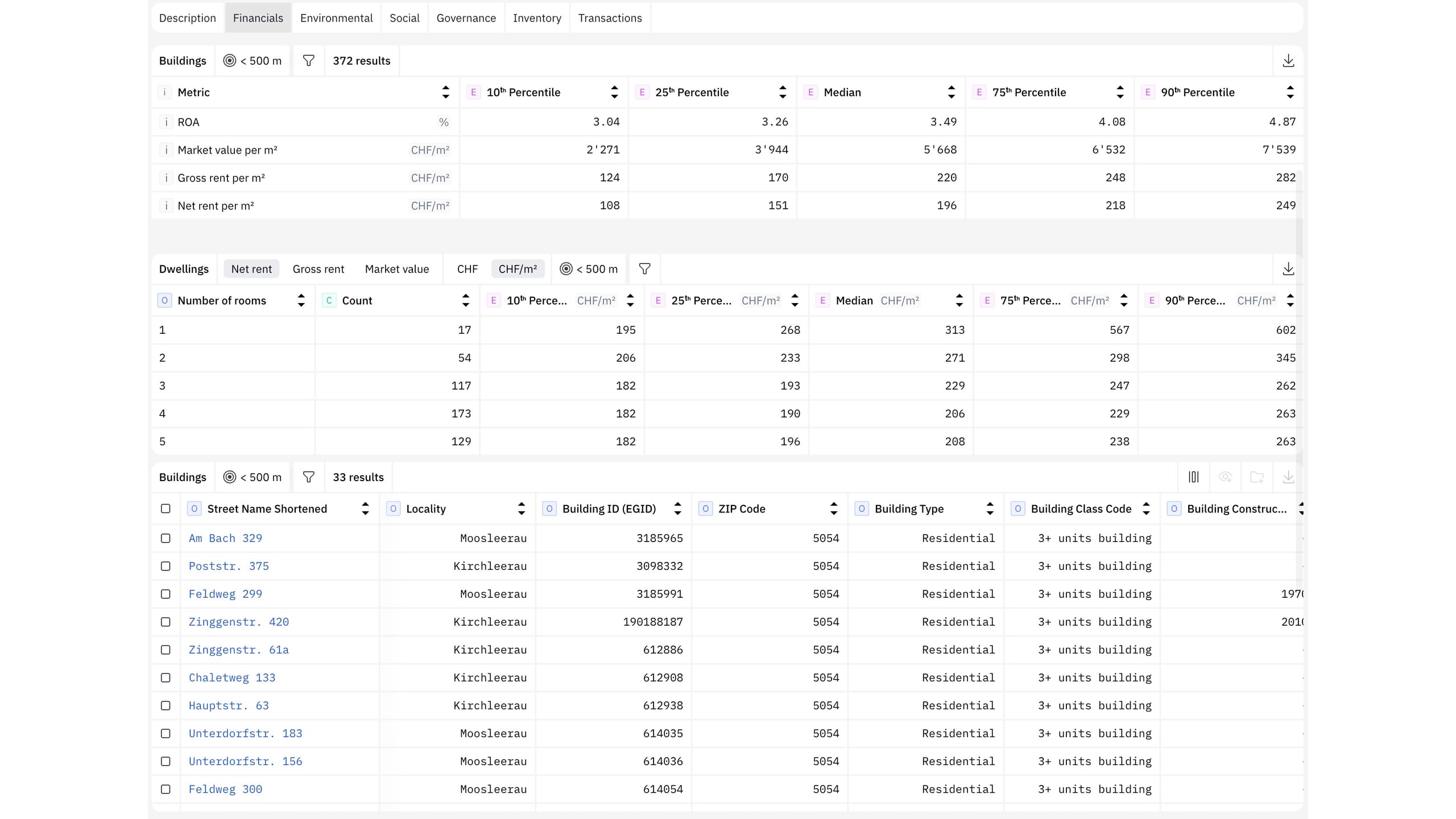
Read the building's ROA, market value and gross and net rent per m² against the 10th-to-90th percentiles of comparable buildings within 500 m, broken down by dwelling size. Every benchmark is drawn from the same structured base, so the building is positioned against its real local market, not a hand-built comparable set. Because the subject and its comparables read the same data, the valuation and the benchmark agree. There is no reconciliation between sources at the end of the file.
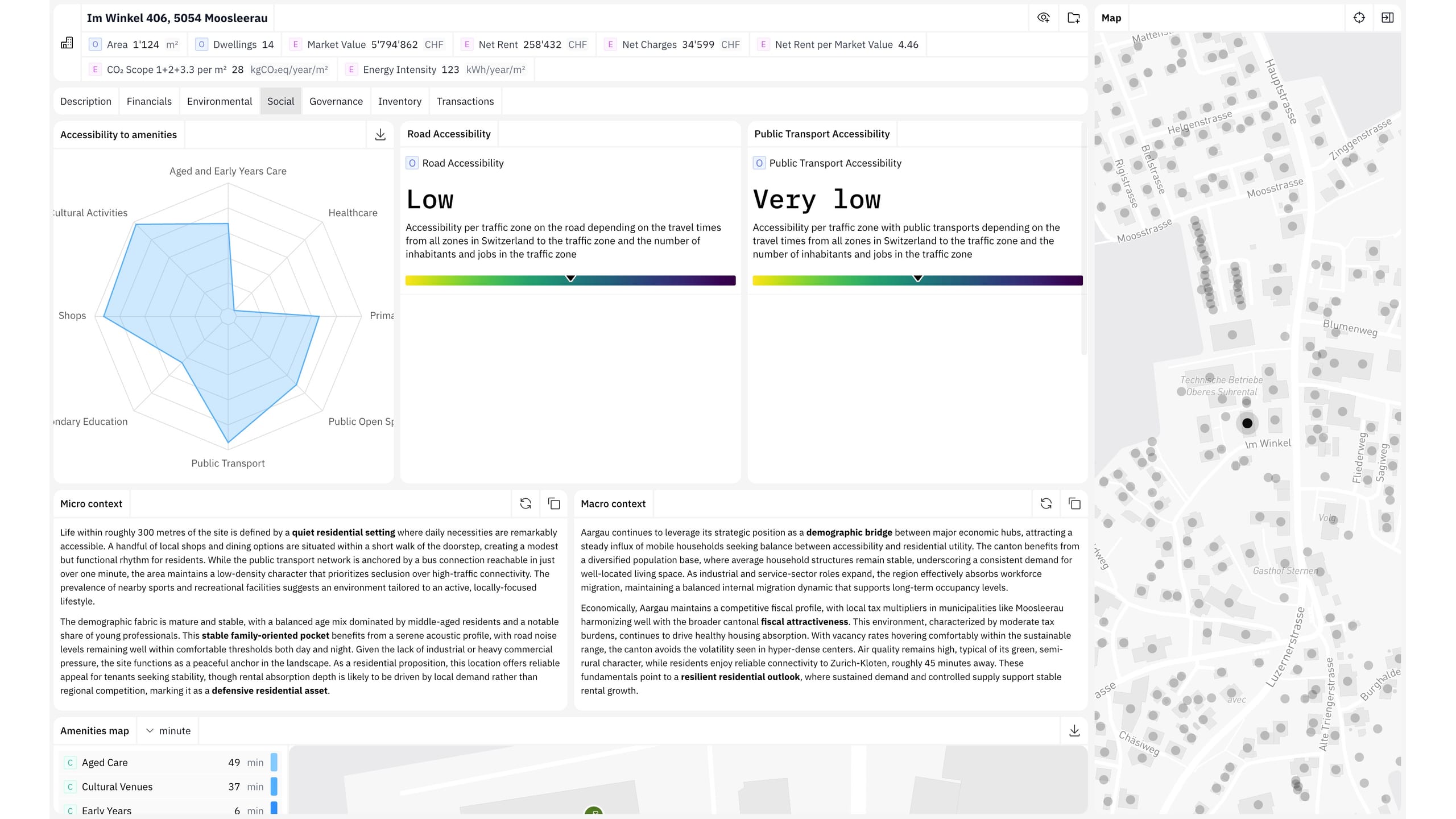
Read the building in its location: micro (accessibility, amenities and the immediate setting) and macro (the canton's economic and demographic situation), each scored, not just described. Market value, net rent, CO₂ and energy intensity sit on the same view, so the building's situation is read quantitatively in one place. Location quality becomes evidence in the file rather than narrative, so a transaction manager can rank a site before a visit and a valuer can defend the position.
Built for
The valuers and transaction managers who turn building evidence into an opinion of value, and want their time on the judgment, not the gathering.
Owners & operators
Quanthome gives direct asset owners and the property managers who run their buildings one consistent, building-level view, performance, tenancy, capex and risk, from the same data.
Asset allocators & indirect real estate investors
One view across your direct buildings and your indirect holdings, down to the building, for the reports and decisions your team owns.
Advisors, consultants & brokers
Advise clients on current transaction and market data, not a deck rebuilt by hand. Spend less time producing decks and more on the analysis the client pays for.
Service providers & valuers
Run the same repeatable process every cycle, on the regulator's timetable, from one structured Swiss dataset rather than a fresh round of data collection each time.
What People Ask Before the First Valuation
What is due diligence in real estate valuation?
Due diligence in real estate valuation is the assembly and verification of the evidence behind a value: the building's structured record, financial benchmarks against comparables, and its micro and macro situation. In most teams this gathering is the slow, fastidious half of the work. Quanthome assembles the building's fields from one structured base into a single building view, each figure traceable to its source.
Who is Quanthome's due diligence built for?
Valuers and transaction managers. Valuers get a complete, source-traceable file and keep their judgment on the opinion of value; transaction managers can screen and rank more buildings without cutting the analysis short. Both read from the same base, so a valuation and a deal agree on the numbers.
Does it take work off the team without missing anything?
Yes. That is the point. The whole view assembles automatically, so the time that went into gathering goes to more deals, while every field carries a source tag so nothing in the file is overlooked. Quanthome removes the fastidious collection, not the analysis, so coverage rises and judgment stays with the team.
Where do the benchmarks and comparables come from?
From the same structured base that covers the market in depth. ROA, market value and rent per m² are read from the 10th to the 90th percentile against the buildings around the asset, within a chosen radius. Because the subject and its comparables read the same data, the valuation and the benchmark agree.
Does it take over the valuer's judgment?
No. Quanthome automates the gathering and assembly (the building record, benchmarks and the micro and macro situation, each figure traceable to its source) and leaves the opinion of value to the valuer. It removes the slow half of the work, the gathering, so judgment gets more of the time and more deals get a thorough file.
Each building's due diligence is assembled from one base, deal after deal
Tell us the building. We will assemble its due diligence with you in a working session, gathered, benchmarked and situated, on current data.
Book a working session